

What Is LLM-as-a-Judge? Using One AI to Grade Another AI's Answers
 What Is LLM-as-a-Judge? Using One AI to Grade Another AI's Answers
LLM-as-a-judge is a method where a large language model scores or compares answers produced by another AI (or by itself), instead of making a human read and grade every single answer. It is now the main tool companies like Anthropic, OpenAI and Google use to check whether a new model is actually better than the old one, before publishing the benchmark leaderboards you often see. Understanding it helps you read headlines like "Model X beats Model Y by Z%" with a more critical eye.
 A Quick Everyday Analogy
Imagine a cooking contest with 1,000 contestants, each submitting one dish. If you hire human judges to taste all 1,000 dishes, write notes and rank them, that takes enormous time and money, and two judges might disagree simply because of personal taste.
The approach AI companies use is close to hiring one excellent chef as the sole judge, except that chef is an AI (usually the strongest model available, like Claude Opus or GPT-4). You give this "AI chef" a set of grading criteria (is the dish tasty enough, cooked properly, does it follow the recipe), and it grades thousands of dishes in minutes, following the same criteria every time, consistently. That is the spirit of LLM-as-a-judge: one AI reads another AI's answer and gives it a score or picks the better one, based on criteria written in advance.
 How It Works
The LLM-as-a-judge process usually has these steps:
- Write the grading criteria (rubric): the evaluator describes in words what counts as a good answer, for example "factually correct, directly answers the question, not too long, polite tone".
- Prepare the question and the answer(s) to grade: this can be a single model's answer (scored from 1 to 10), or two models' answers placed side by side so the judge picks which one is better (called "pairwise" grading).
- Send everything to the AI judge: a prompt is built from the original question, the answer(s) to grade, the rubric, and sometimes a reference answer for the judge to compare against.
- The AI judge returns a structured result: a score, or a choice of "answer A wins / answer B wins / tie", along with a short explanation.
- Combine thousands of individual gradings into one overall number, which is exactly what shows up on leaderboards.
This approach became widely used after the 2023 paper "Judging LLM-as-a-Judge with MT-Bench and Chatbot Arena" showed that a strong model (GPT-4 at the time) acting as judge agreed with human judgments more than 80% of the time, close to the agreement rate between two human judges. Because of this, many evaluation toolkits, including rating systems like Chatbot Arena where users vote, now use an AI judge to handle the huge volume of answers humans could never grade by hand.
 What This Means for You
You do not need to build your own LLM-as-a-judge system to benefit from this idea:
- Read "Model X beats Model Y by Z points" headlines more critically: ask whether that number came from human graders or from another AI grading it, and what criteria were used. A different AI judge with different criteria can produce a completely different ranking.
- Build a mini "judge" for your own work: if you often ask AI to write several versions of the same thing (say, 5 ad scripts), you can ask that same AI (or a different one) to score all 5 against criteria you set, like "short, has a clear call to action, upbeat tone", before you read the top-scoring one yourself. Sample prompt: "Score the 5 scripts below from 1 to 10 based on 3 criteria: brevity, clear call to action, upbeat tone. Give a short reason for each score."
- Understand why two leaderboards disagree: one leaderboard uses GPT as judge, another uses Claude, and each judge may slightly favor answers written in a style similar to its own, so no single leaderboard should be treated as absolute truth.
 Common Misconceptions
- "An AI judge is always more objective than a human." Not quite. Research shows AI judges have a few systematic biases: they tend to favor longer answers (verbosity bias), favor whichever answer appears in a certain position (position bias, where swapping the order of answer A and B can flip the result), and especially favor answers written in a style similar to their own (self-enhancement bias).
- "LLM-as-a-judge fully replaces humans." In practice it is usually used alongside humans: the AI grades a large volume quickly to flag interesting cases, and humans spot-check a smaller sample to confirm the AI graded correctly. This is one way to verify an AI's answers, not a replacement for human review.
- "A high score means the answer is definitely correct." An AI judge grades against the written criteria, it does not independently verify facts in the real world. A confidently written answer with fabricated details, similar to AI hallucination, can still score highly if the rubric does not require fact-checking.
FAQ
How is LLM-as-a-judge different from a regular benchmark? A benchmark is a fixed set of questions with clear right or wrong answers that a machine can grade automatically (like a math problem with a definite answer). LLM-as-a-judge is used for open-ended questions with no single correct answer, like writing, advice, or conversation, where you need to judge "how good" something is rather than just "right or wrong".
Does the judge AI need to be stronger than the AI being graded? Usually yes, because the judge needs enough ability to understand and analyze complex answers. Many studies use the strongest available model as the judge for every other model, including weaker ones.
Can I use this to grade student work or employee output? Technically yes, but be careful: an AI judge can favor longer essays or writing styles familiar to it, so it should mainly be used for a rough first pass or suggestions. The final decision, especially one that affects a grade or a performance review, should still involve a human reviewing it.
Why don't AI companies just rely on fixed benchmarks instead of LLM-as-a-judge? Because many capabilities of modern AI, natural conversation, creative writing, answering open-ended questions, do not have a single "correct" answer a machine can automatically check, so you need an AI that can read and understand to judge overall quality, similar to how a human would read and comment.
Is LLM-as-a-judge related to RLHF? They are related but different. RLHF is a training step where a model learns to answer better based on feedback, originally mostly from humans and now sometimes from AI too. LLM-as-a-judge is an evaluation tool, used to measure how good a model's answers already are, and it can be used either on its own or as part of that training process.
If you are just starting to learn about AI from scratch, What Is AI, explained simply for beginners is a good place to start before coming back to this deeper look at how AI quality gets evaluated.
More articles

Universal Modder: the AI tool that merges Minecraft into GTA V using Claude Code
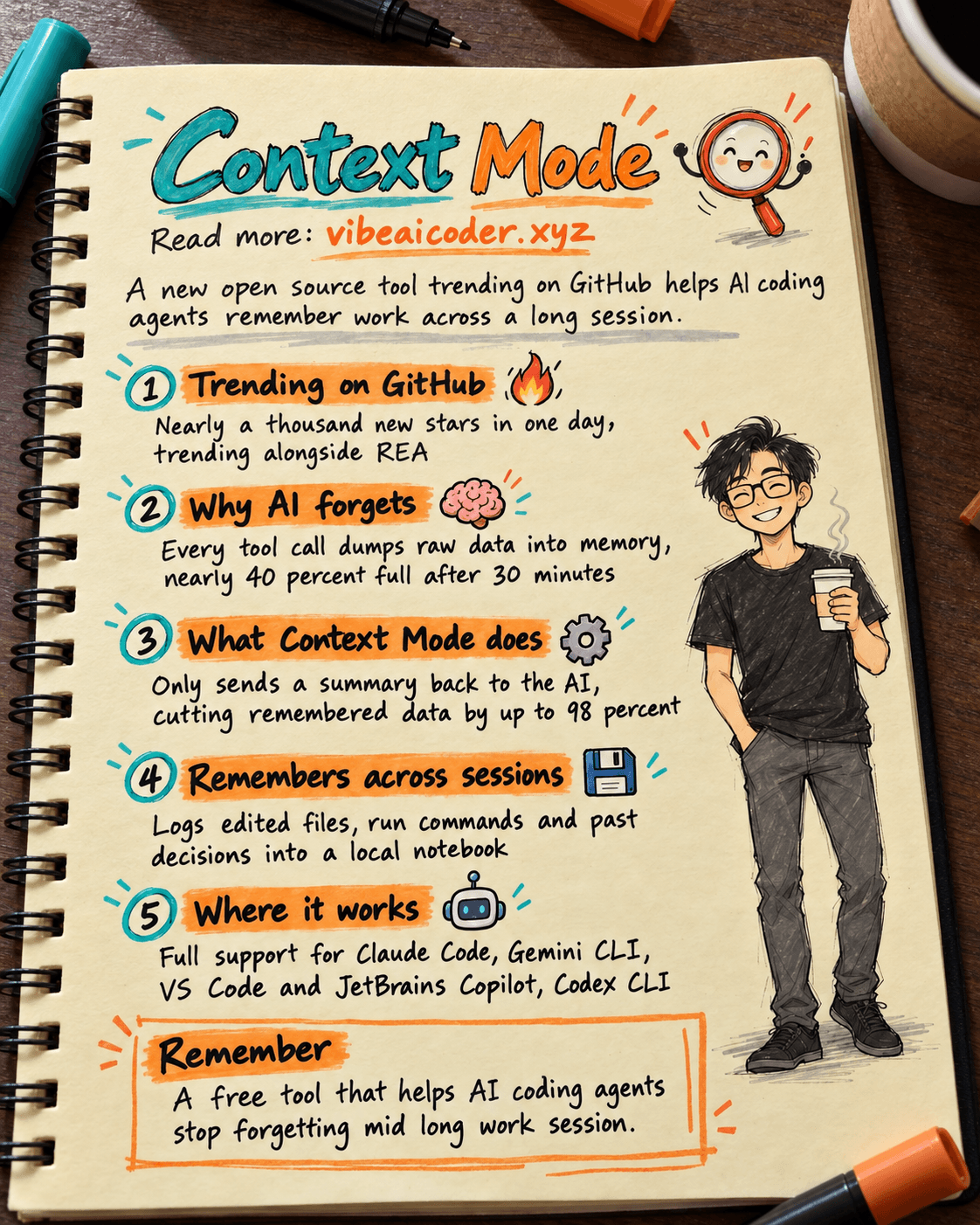
Context Mode: the GitHub tool that stops AI coding agents from forgetting mid session

 Why Does Vietnamese Use More AI Tokens Than English?
AI Training vs Inference: What Is the Difference?

Gemini 4 Argon Reads a 500-Page Chemistry Patent in One Afternoon

Claude Opus 5.5 Codes a Real Money Trading Game in One Day