 Haiku, Sonnet, or Opus: Which Claude Model Should You Use?
Haiku, Sonnet, or Opus: Which Claude Model Should You Actually Use?
A lot of people default to the most powerful model available, then get surprised when their monthly API bill comes in five times higher than it needed to be.
 Three models, three very different price tags
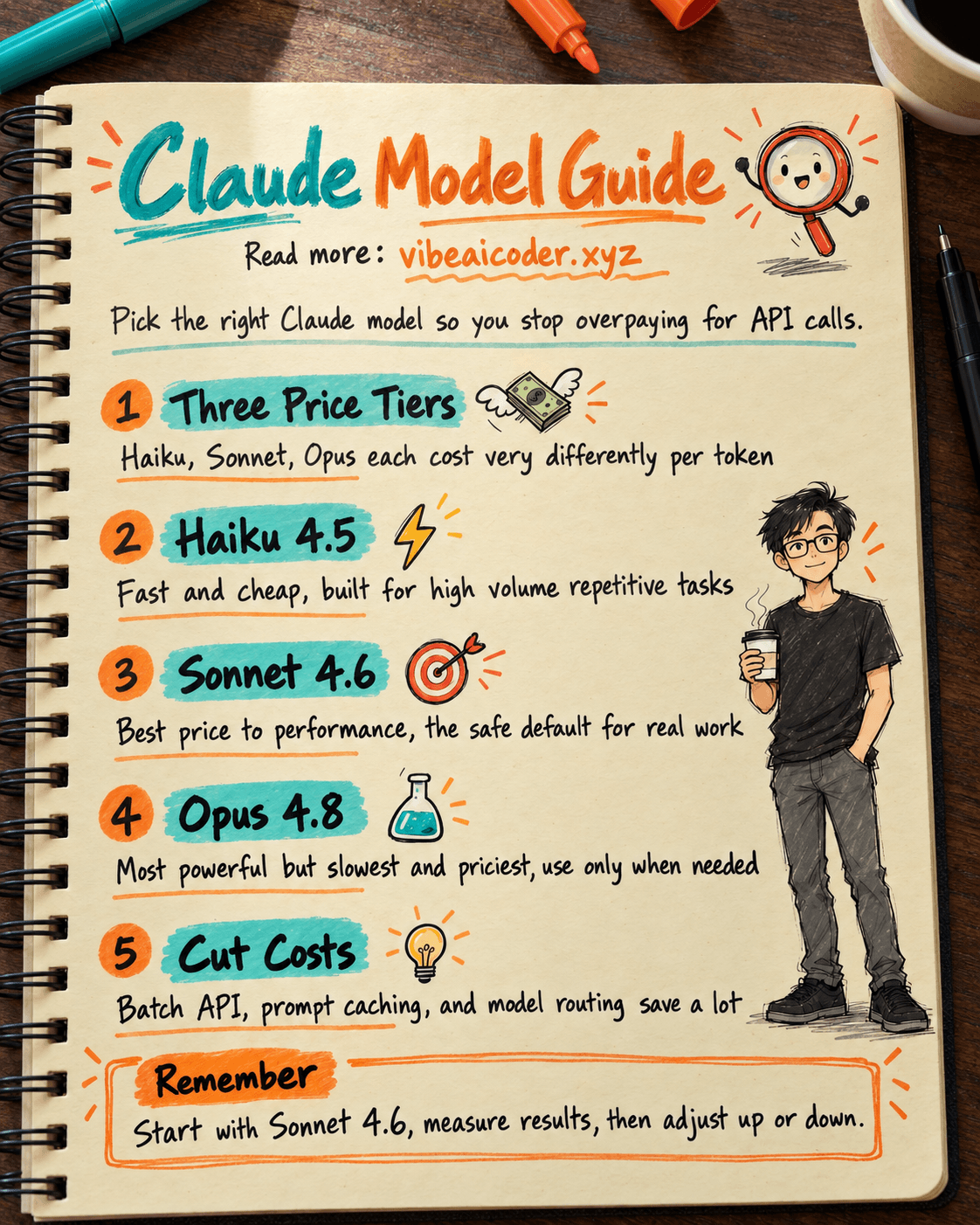
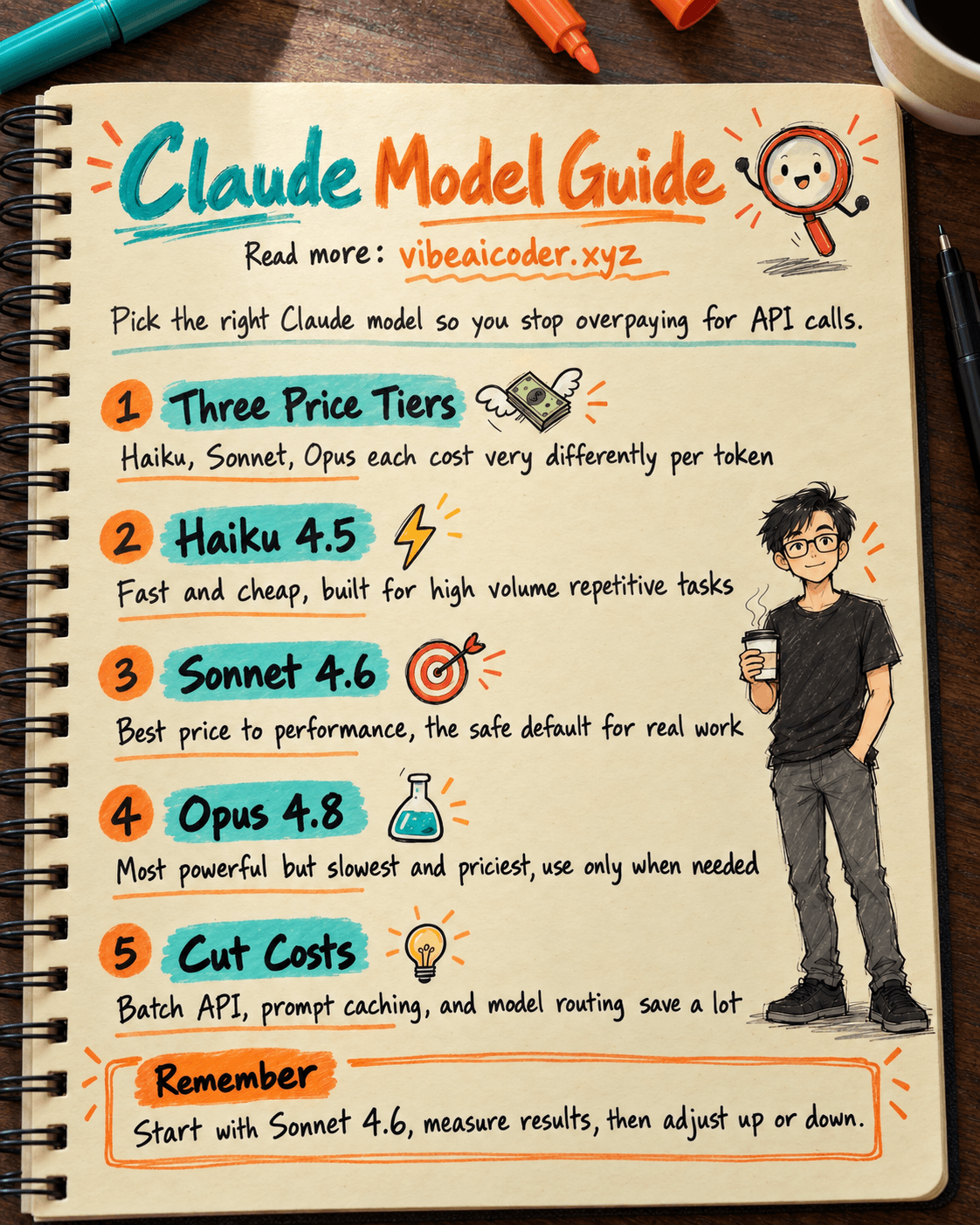
In 2026 Anthropic offers three main models: Haiku 4.5, Sonnet 4.6, and Opus 4.8. Pricing is per million tokens, and the gap between them is not small at all.
Haiku 4.5 costs just $1 per million input tokens and $5 per million output tokens, the cheapest of the three. Sonnet 4.6 sits at $3 input and $15 output, a balance between price and capability. Opus 4.8 is the priciest at $5 input and $25 output. In other words, if you use Opus instead of Haiku for the same task, you are paying five times more for input and five times more for output, often without a real reason to.
 Haiku 4.5: fast, cheap, built for repetitive work
Haiku exists to handle high volume, high speed, low cost work. If you need to classify thousands of pieces of text, extract structured data, summarize short passages, answer chatbot FAQs, or pre process data before feeding it into a more complex pipeline, this is the default choice.
Its strength isn't depth of reasoning, it's response speed and rock bottom cost. Think of Haiku as the employee who works fast, doesn't need elaborate instructions, and knocks out clearly defined tasks without overthinking them.
 Sonnet 4.6: the default choice for most real work
Sonnet 4.6 has the best price to performance ratio of the three. It's the model you should reach for in most practical work: writing code, building new features, analyzing documents, producing in depth content, or running multi step tool calling workflows.
It's strong enough to handle tasks with genuinely complex logic, but not so expensive that you have to think twice before using it regularly. If you're not sure which model to pick, starting with Sonnet 4.6 is always the safe answer.
 Opus 4.8: only reach for it when you truly need it
Opus 4.8 is the most capable model, but also the slowest and the most expensive. Use it when the task genuinely demands it: complex multi step reasoning, refactoring a large codebase with many dependencies, long running autonomous agents, or research problems that require deep inference.
One thing worth knowing: Opus's newer generation tokenizer can produce up to 35% more tokens than older models for the same piece of text. That means the real cost you pay can end up noticeably higher than the listed price suggests. Run the numbers carefully before you move an entire pipeline over to Opus.
All three models support a 1 million token context window, so context length isn't a differentiator here.
 Four practical ways to cut real costs
Picking the right model is just the first step. A few techniques can meaningfully cut your costs without hurting output quality.
Batch API lets you submit many requests at once and get results back later, in exchange you save 50% on token costs. It works well for anything that doesn't need an instant response.
Prompt caching cuts the cost of cached input by up to 90%, extremely effective when you reuse the same large chunk of context across many requests, for example a long document or a complex system prompt.
Model routing inside a pipeline means using Haiku for simple steps like classification, filtering, or formatting, and only sending the genuinely hard parts to Sonnet or Opus. This makes the whole system much cheaper while keeping final output quality intact.
A practical rule to remember: start with Sonnet 4.6, measure the quality of the results, drop down to Haiku if it turns out to be overkill, and move up to Opus if it isn't enough. Don't guess, measure.
More articles

AI Training vs Inference: What Is the Difference?

Gemini 4 Argon Reads a 500-Page Chemistry Patent in One Afternoon

Claude Opus 5.5 Codes a Real Money Trading Game in One Day

What Is a Token in AI? Why ChatGPT and Claude Charge by Tokens

What Is Chain of Thought? Why Asking AI to Think Step by Step Works Better

Claude Sonnet 5.5 vs GPT-6.1 Sol: Which AI Model Is Worth Using?