🦊 Firefox Busted by AI: 22 Security Flaws Found in 2 Weeks
Can you believe it? An AI system just did the work of an entire elite security team in 14 days.
Anthropic and Mozilla team up
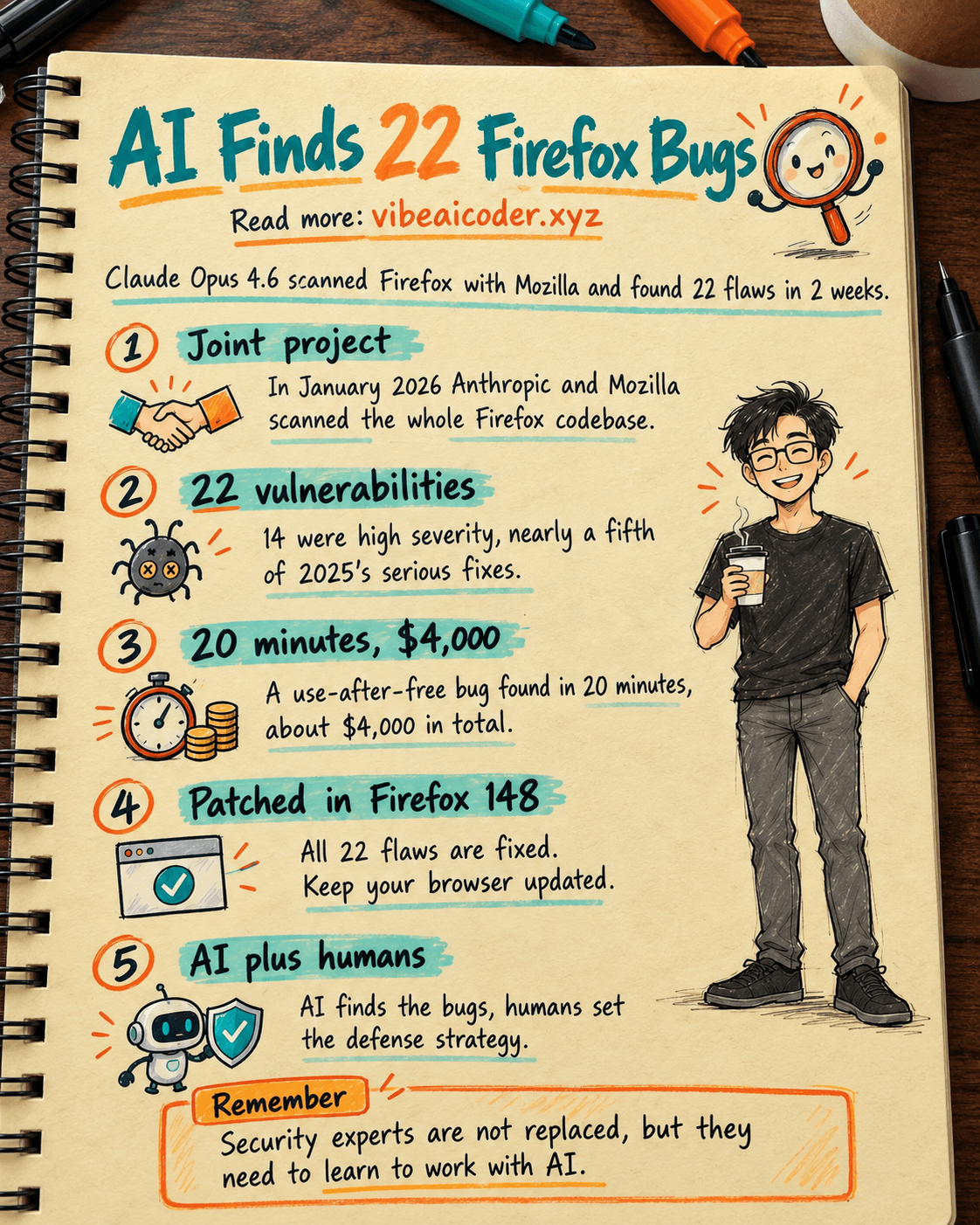
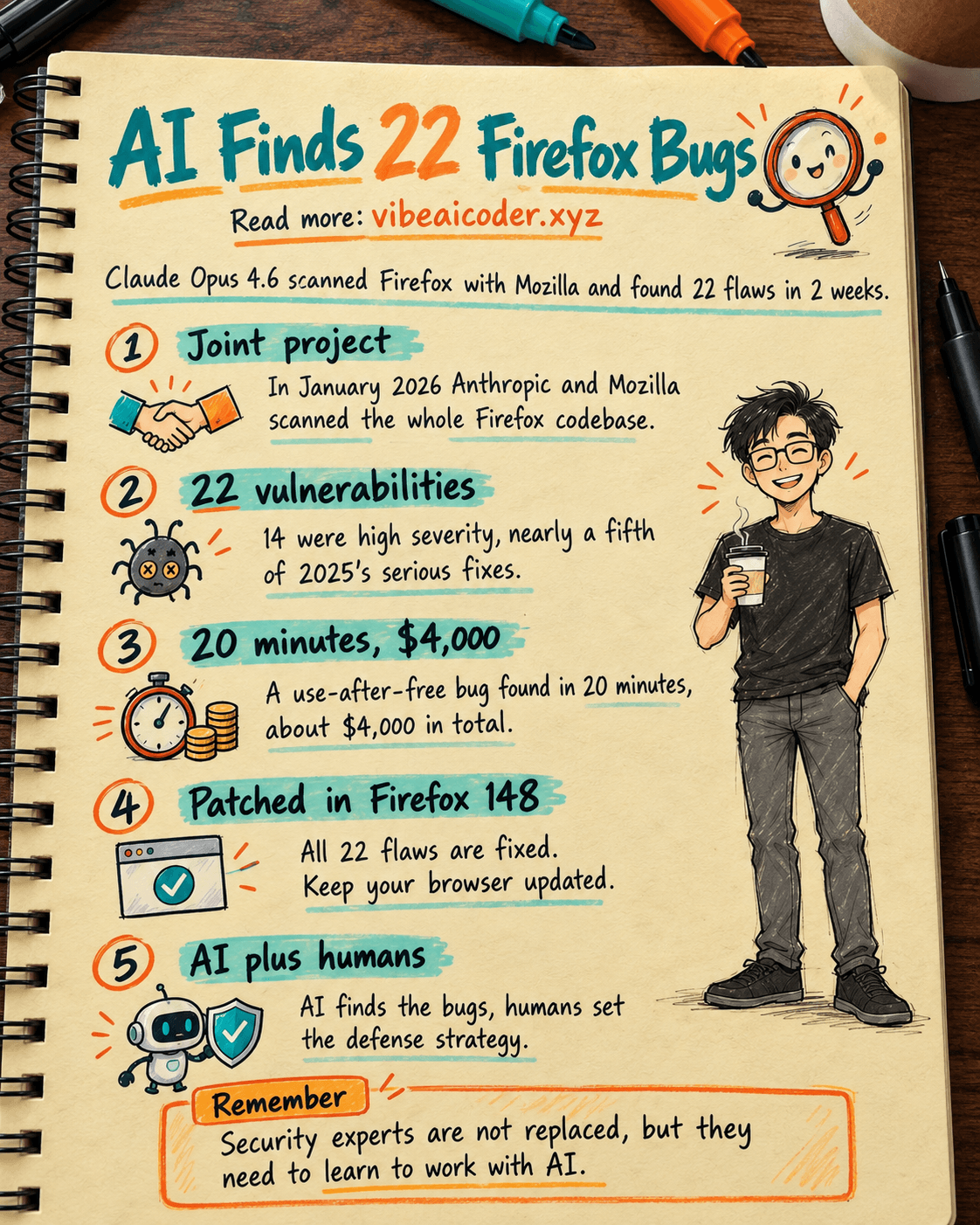
In January 2026, Anthropic partnered with Mozilla, using Claude Opus 4.6 to scan the entire Firefox codebase. It's proof that AI is becoming a serious asset in global cybersecurity defense.
22 vulnerabilities exposed
In just two weeks, Claude found 22 security vulnerabilities, including 14 high severity bugs, nearly a fifth of all the serious bugs patched throughout all of 2025. If these flaws had fallen into the wrong hands, they could have led to data leaks, stolen passwords, or full browser takeovers.
20 minutes and $4,000
Claude found a use-after-free bug, one of the most dangerous types of memory vulnerabilities, in just 20 minutes. The operating cost: about $4,000 for a few hundred runs. Compared to hiring security experts for tens of thousands of dollars, this is a massive leap in both speed and cost. That said, the AI only managed to write working exploits for 2 of the 22 vulnerabilities, humans are still needed for the final review.
Already patched in Firefox 148
All 22 vulnerabilities have been fixed by Mozilla in Firefox 148. Keep your browser updated. The combination of AI and human expertise is setting a new standard for information security.
The future of security work
AI finds bugs dozens of times faster than humans. Security experts won't be replaced, but they do need to learn how to work with AI. AI finds the bugs, humans set the defense strategy.
More articles

Gemini 4 Argon Reads a 500-Page Chemistry Patent in One Afternoon

Claude Opus 5.5 Codes a Real Money Trading Game in One Day

What Is a Token in AI? Why ChatGPT and Claude Charge by Tokens

What Is Chain of Thought? Why Asking AI to Think Step by Step Works Better

Claude Sonnet 5.5 vs GPT-6.1 Sol: Which AI Model Is Worth Using?

 Claude Opus 5.5 Launches: 30% Faster, 40% Cheaper, Blocks AI Brain Copying