Deterministic vs Stochastic in AI: Two Concepts That Define How AI Answers You
Deterministic vs Stochastic in AI: Two Concepts That Define How AI Answers You
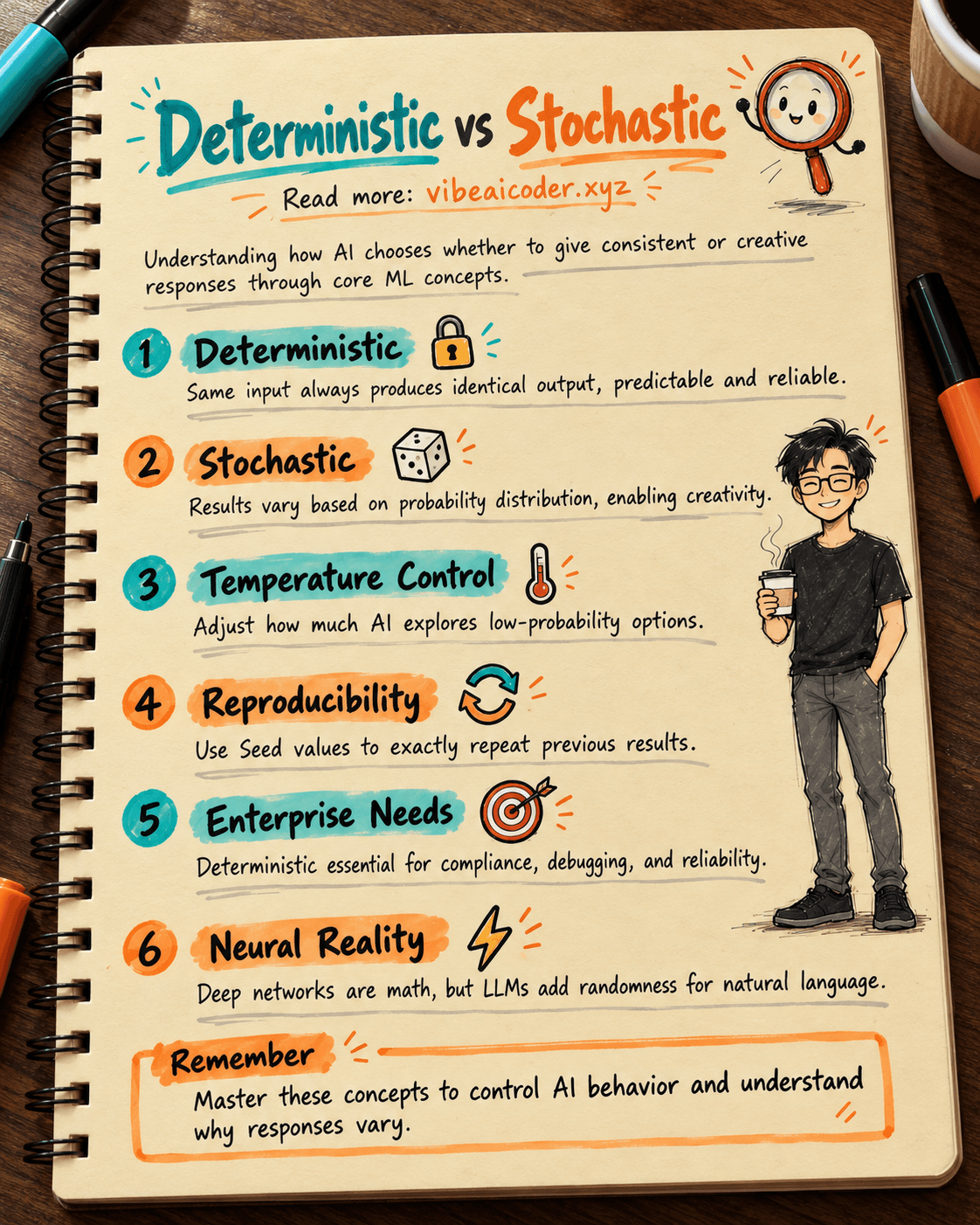
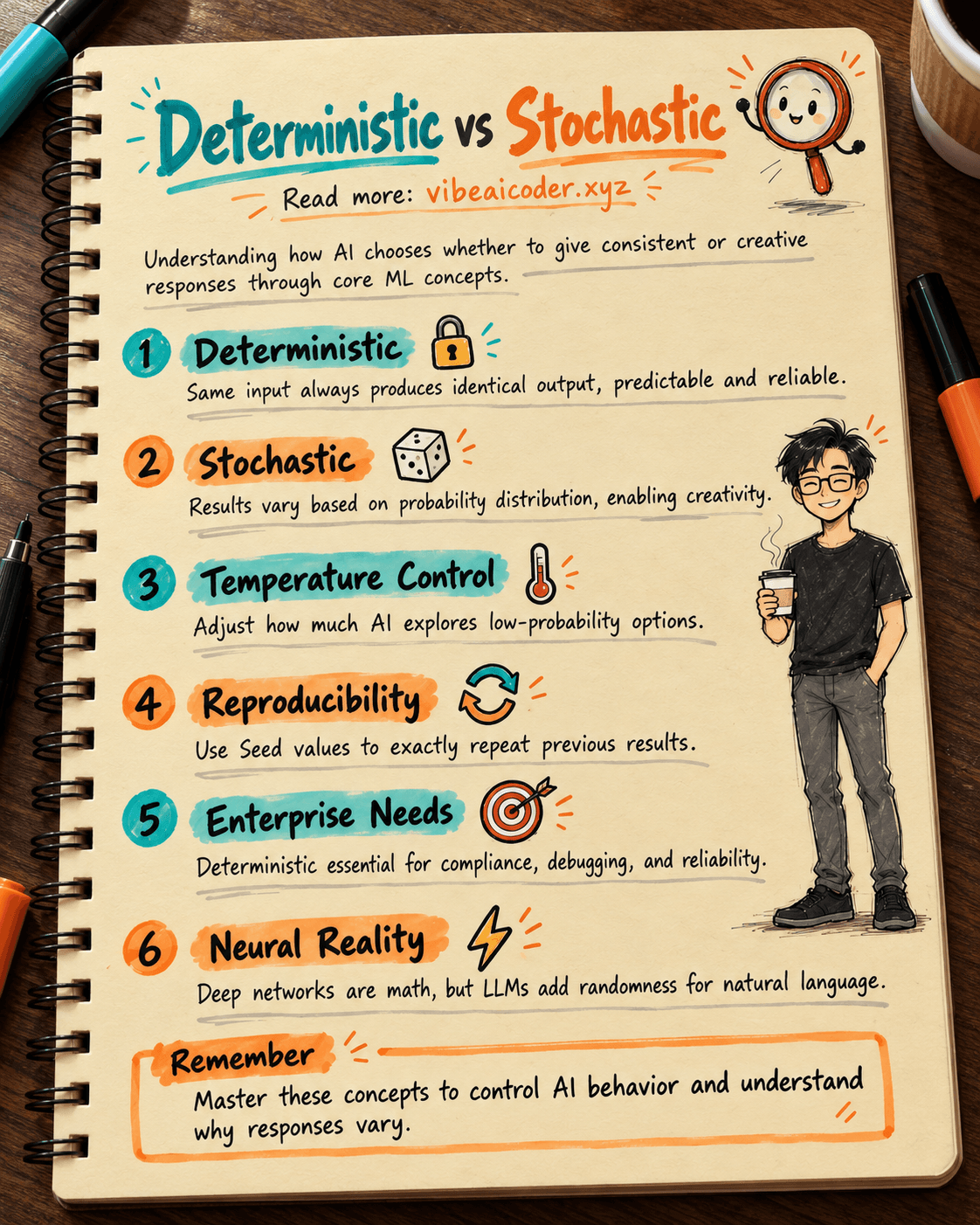
Have you ever wondered why asking ChatGPT the same question gives you a different answer each time? The secret lies in two core concepts that everyone in AI needs to understand.
Deterministic: Results Always Guaranteed
Deterministic means the same input always produces the same output, never changing. Think of it like a math formula. If you input 5 and the function is squaring, the result is always 25. The A* pathfinding algorithm and fixed math functions all work this way. The biggest advantage is that they're easy to control, easy to debug, and produce highly consistent results.
Stochastic: Creativity Comes from Randomness
The complete opposite, Stochastic allows different results each time you run it based on probability distribution. This is how ChatGPT, Claude, and Gemini actually work. Each time you ask a question, the model "rolls the dice" to choose the next word, so answers are always fresh and natural. Thanks to this randomness, AI can be creative and diverse instead of repeating the same boring pattern.
Temperature: The Magic Adjustment Knob
Here's the most interesting part. You can decide how much AI should "create" through Temperature. When Temperature equals 0, the model uses Greedy Decoding, always choosing the token with the highest probability, almost deterministic. When Temperature is high, the model takes more risks, willing to choose even low-probability tokens, creating unexpected results. There's also Seed, a number that initializes the random number generator. If you keep the same Seed and Temperature, you can exactly reproduce the previous result.
Why Should Businesses Care?
In enterprise environments, Deterministic is extremely important for three reasons. First is Reliability: when extracting data, writing code, or calculating logic, you need accurate and consistent results. Second is Testing and Debugging: if each run produces different results, it's very hard to pinpoint where the error is. Third is Compliance: in healthcare and legal fields, every AI decision needs repeatability and must be explainable.
A Little Known Fact
At its core, deep neural networks are actually matrix math, completely deterministic. But LLMs intentionally add stochastic elements to make the output language more natural. Interestingly, even when you set Temperature to 0, results can still vary slightly due to GPU floating-point errors from parallel calculations in deep processing layers. Achieving 100% absolute determinism in practice is nearly impossible.
What are you using AI for, and do you prefer AI answers to be "certain" or more "creative"?
#LearnOnTikTok #AI #Deterministic #Stochastic #MachineLearning
More articles

Advisor Strategy: How Anthropic Lets Small AI Models Run Autonomously
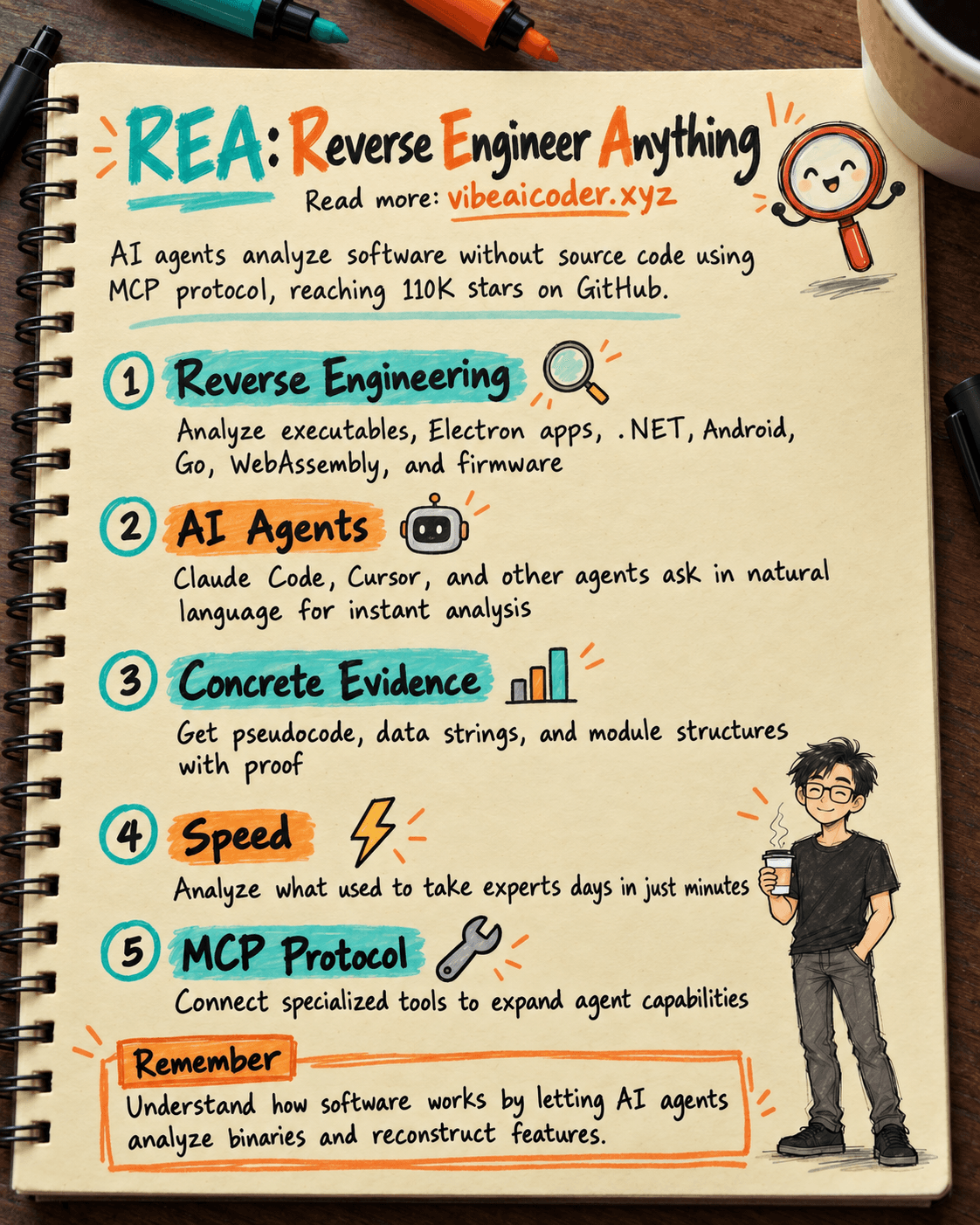
REA: AI Reverse Engineers Software Without Source Code, Hits 25K Stars
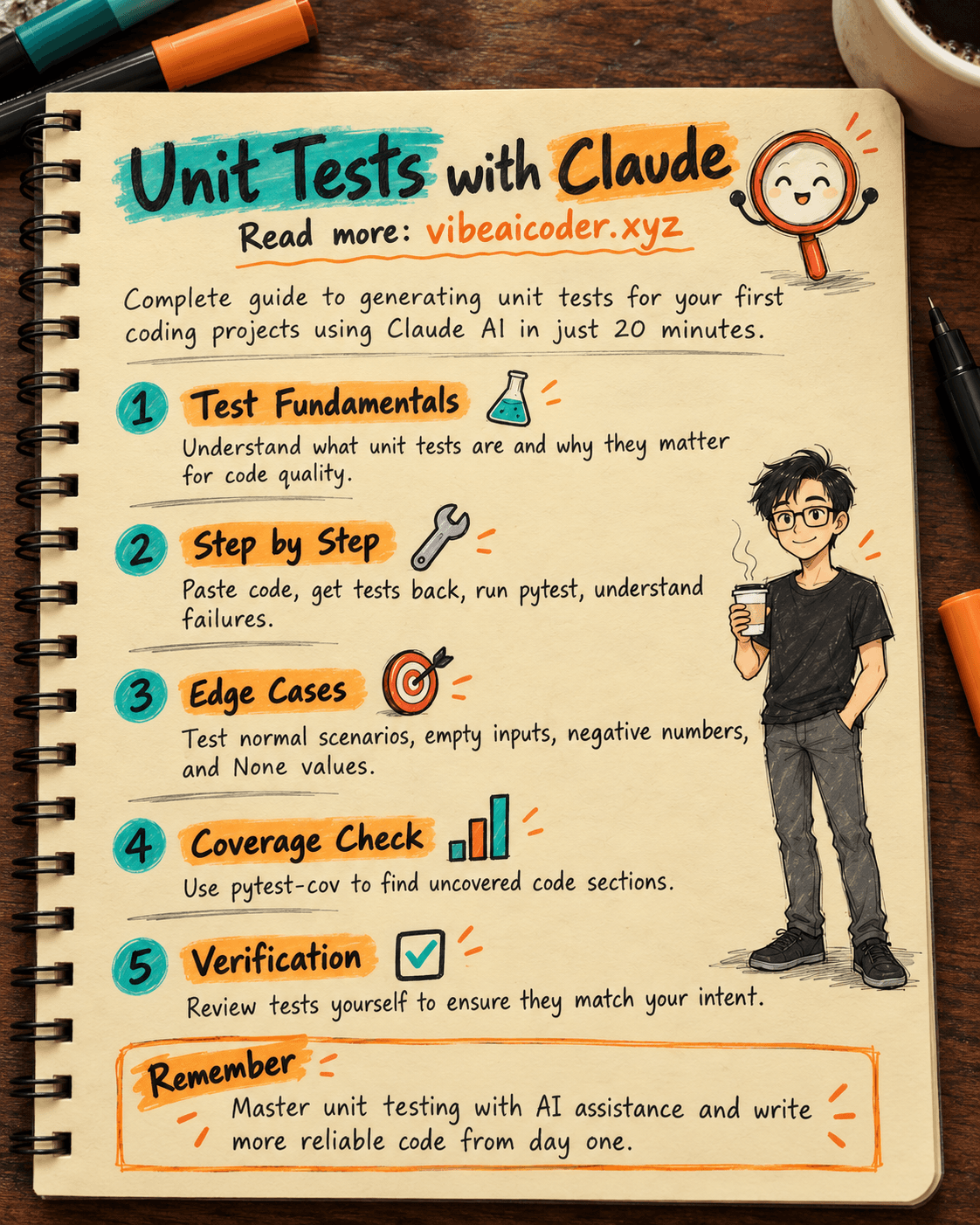
Write Unit Tests with Claude: Complete Guide for Your First Project in 20 Minutes
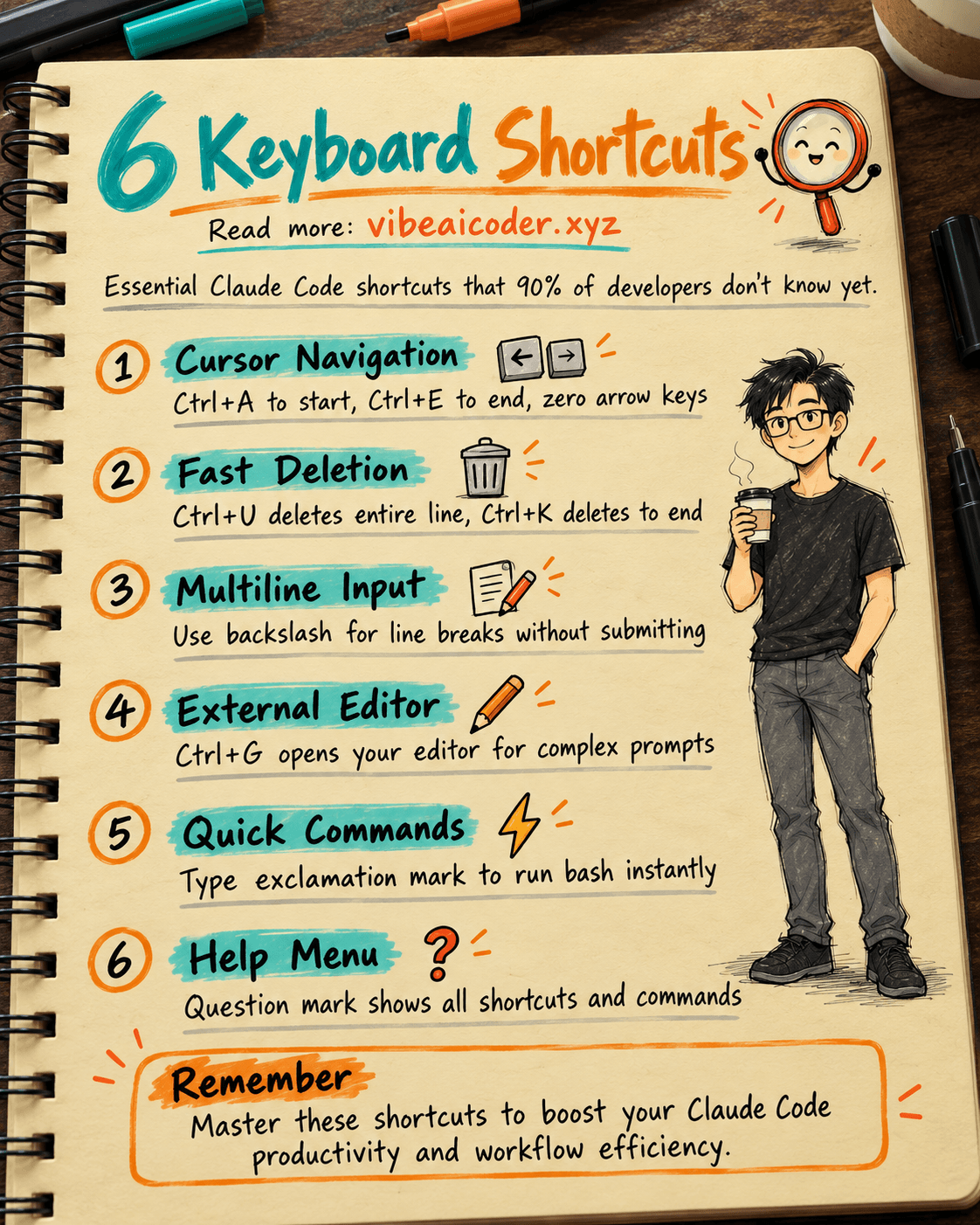
6 Claude Code Keyboard Shortcuts 90% of Developers Don't Know
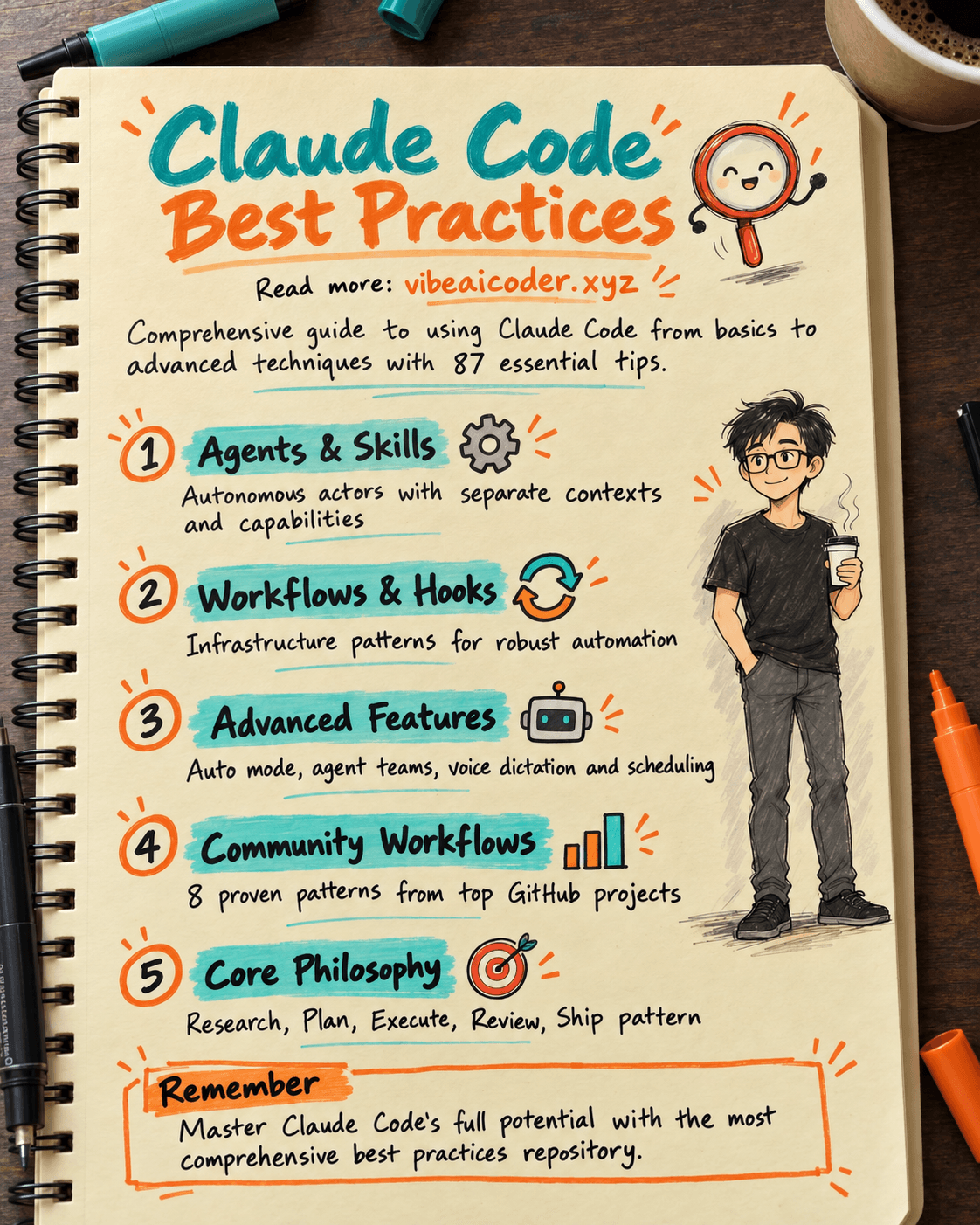
27K Stars: The Claude Code Best Practice Repository Every Developer Should Bookmark

🎼 Orchestrate 3 Repos (API, Web, Mobile RN) With OpenAI Symphony to Ship a Feature in 1 Day