 OpenAI's Super App Combines ChatGPT, Atlas and Codex
On March 20, 2026, are you tired of jumping back and forth between ChatGPT, your browser and your coding tool? OpenAI just made a move that has the tech world buzzing: a unified desktop super app is coming very soon.
The end of the "fragmented" era
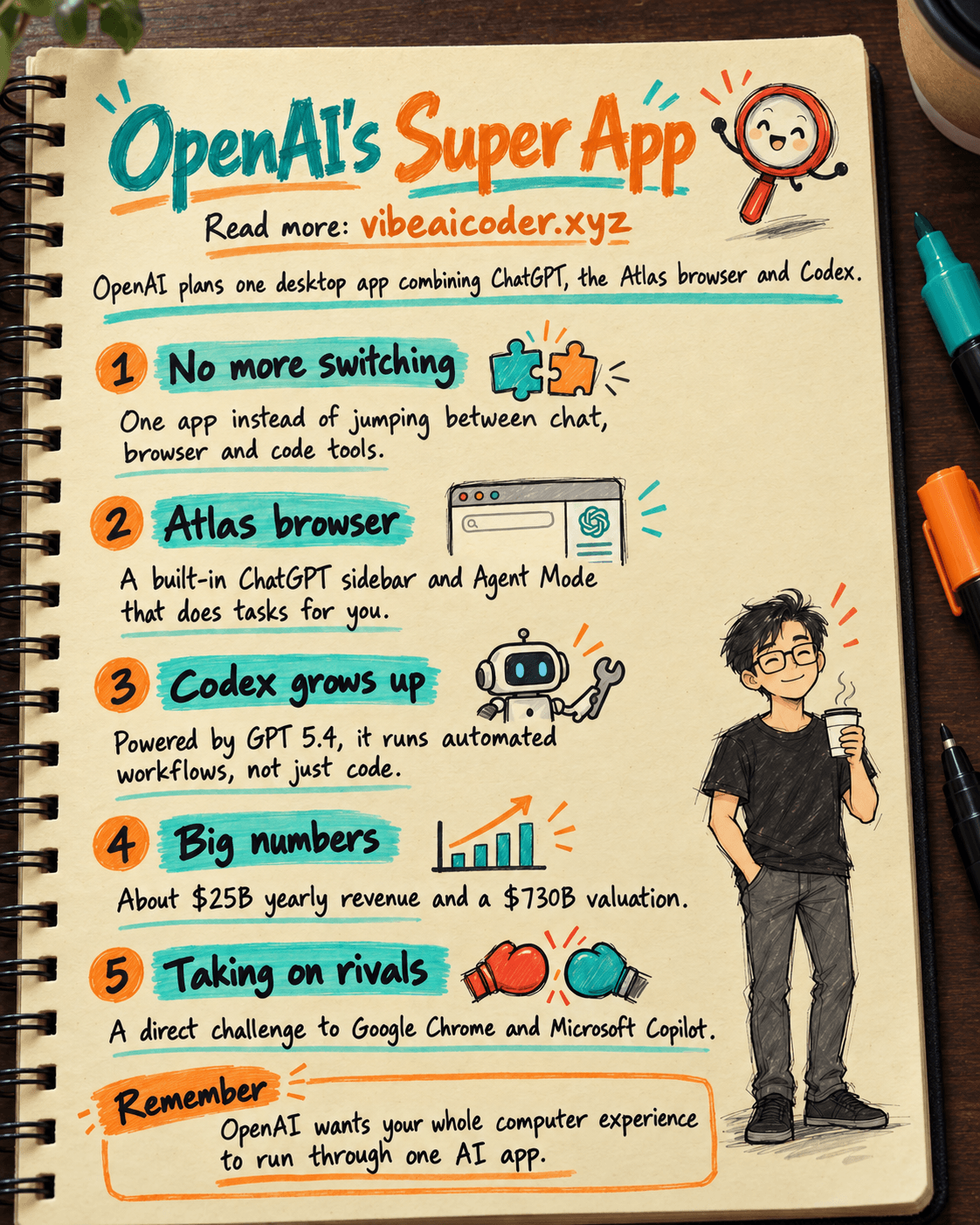
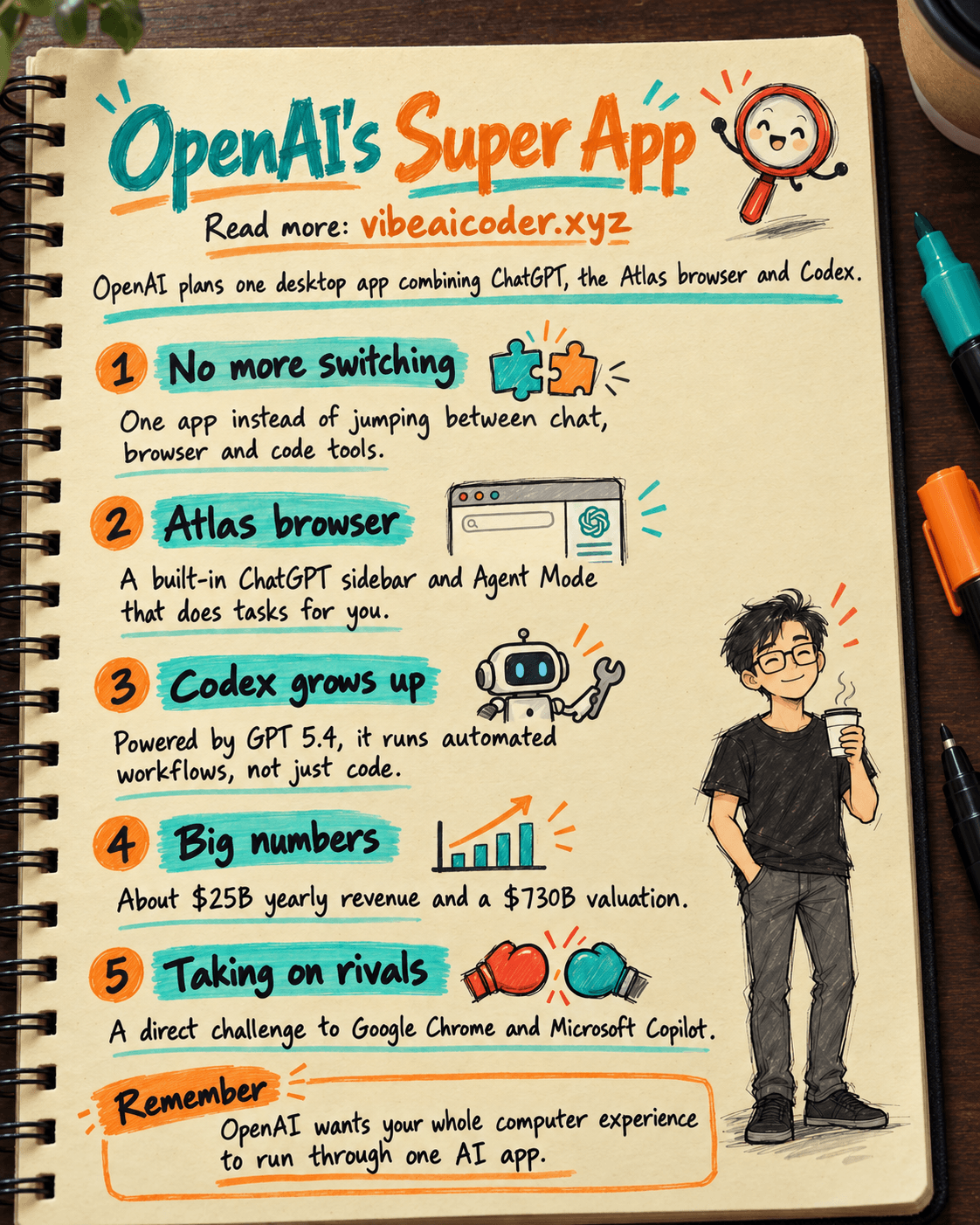
Major outlets including The Wall Street Journal, The Verge and CNBC have confirmed that OpenAI is pushing hard on a plan to own every experience on your computer. Fidji Simo, CEO of Applications at OpenAI, has been blunt about it: splitting the product into separate pieces is slowing progress down and hurting the quality of the experience. The goal is clear. Bring ChatGPT (the AI chat assistant), Codex (the coding agent) and Atlas (the AI browser) together into a single "all in one" app. That means users no longer need to install separate tools and can instead search, write and code from one place.
Atlas Browser: the backbone of the new ecosystem
In case you missed it, Atlas Browser launched back in October 2025 on macOS and is getting ready to land on Windows. It is not just another web browser built on Chromium. Its real selling point is a deeply integrated ChatGPT sidebar that can summarize web pages, compare products or analyze data on the spot. The standout feature is Agent Mode, which lets the AI carry out tasks on your behalf, like booking a flight or editing a document directly on the web, all under your supervision. Thanks to Browser Memories, Atlas understands the context of your work better than any rival browser out there.
Codex and the power of agentic AI
OpenAI is not stopping at the browser. It is also expanding Codex, the tool originally built for programmers, into a general purpose productivity assistant. Powered by the latest GPT 5.4 series models, Codex can now do more than write code. It can run complex automated workflows on its own. Folding Codex into the desktop super app would turn your computer into a kind of command center, where AI agents work in parallel to handle deep, specialized tasks without you needing to get your hands dirty at every step.
The numbers behind the ambition, and an eye on an IPO
Behind this shift is an enormous amount of financial firepower. As of early March 2026, OpenAI's annual revenue had reached about $25 billion, up 17% in just a few months. Following a historic funding round from Amazon, Nvidia and SoftBank, OpenAI's valuation has climbed to roughly $730 billion. That puts the company in a strong position for a planned IPO expected in late 2026 or early 2027. Launching the super app is a strategic move to prove to investors that OpenAI is not just a chatbot company, it is building a genuine AI operating system.
A direct challenge to the giants
This move is widely seen as a direct challenge to Google Chrome and Microsoft Copilot. While Chrome is still figuring out how to weave AI into its massive browser market share, OpenAI has built an AI native browser from the ground up. At the same time, it is also how OpenAI is defending its position against the rapid rise of Anthropic (Claude Code) in the enterprise and developer market. If this super app succeeds, OpenAI could become the default gateway for everything we do on our computers.
Have you tried the Atlas browser yet, or are you waiting for this super app to officially launch?
More articles

AI Training vs Inference: What Is the Difference?

Gemini 4 Argon Reads a 500-Page Chemistry Patent in One Afternoon

Claude Opus 5.5 Codes a Real Money Trading Game in One Day

What Is a Token in AI? Why ChatGPT and Claude Charge by Tokens

What Is Chain of Thought? Why Asking AI to Think Step by Step Works Better

Claude Sonnet 5.5 vs GPT-6.1 Sol: Which AI Model Is Worth Using?