 ECC Framework Hits 207K GitHub Stars: Build Self-Learning AI Agents
Are you still calling the ChatGPT or Claude API by hand, starting from scratch every single time? The ECC Framework is changing how developers build AI agents, and 207,000 people on GitHub have already taken notice.
What ECC Is and Why It's Going Viral
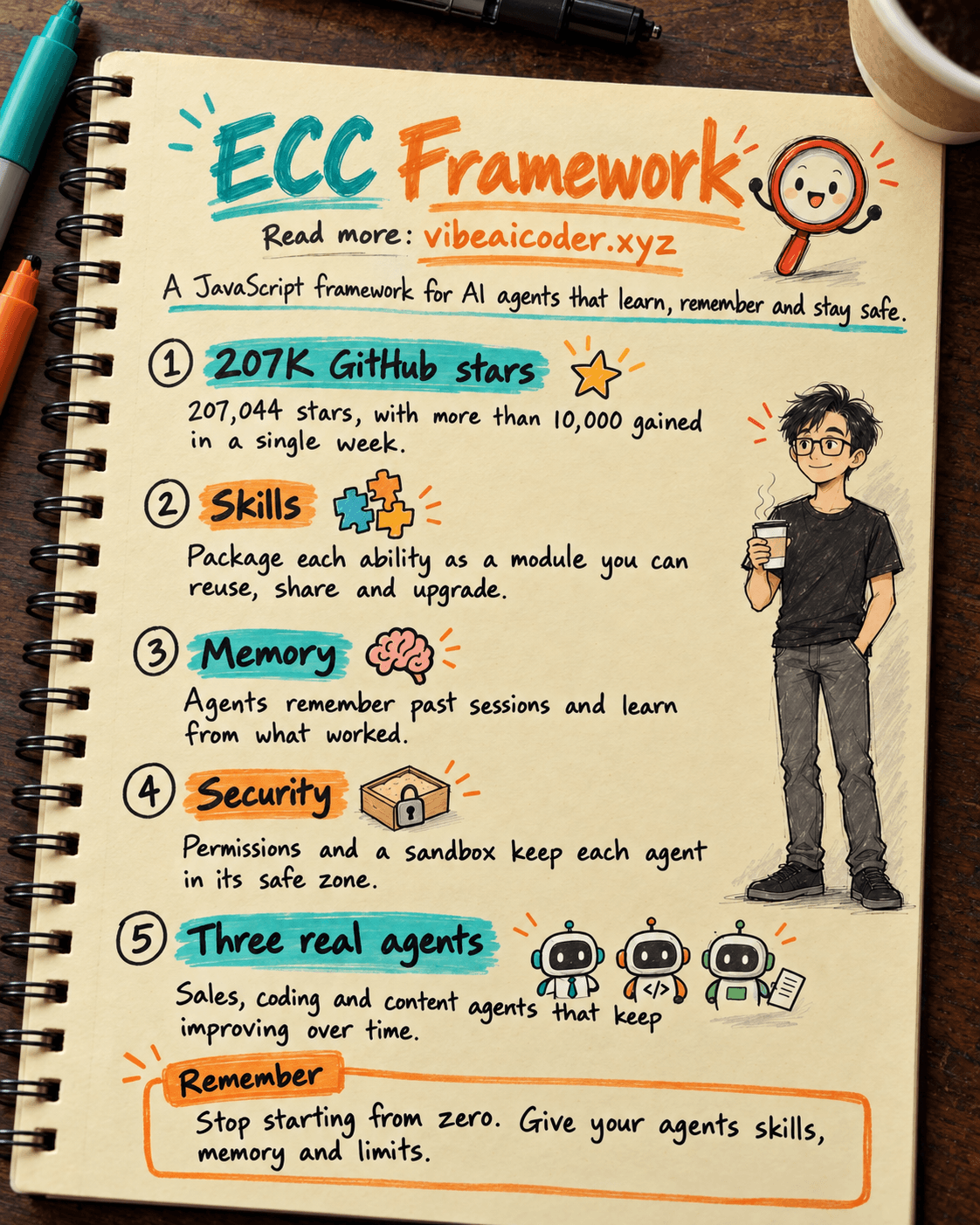
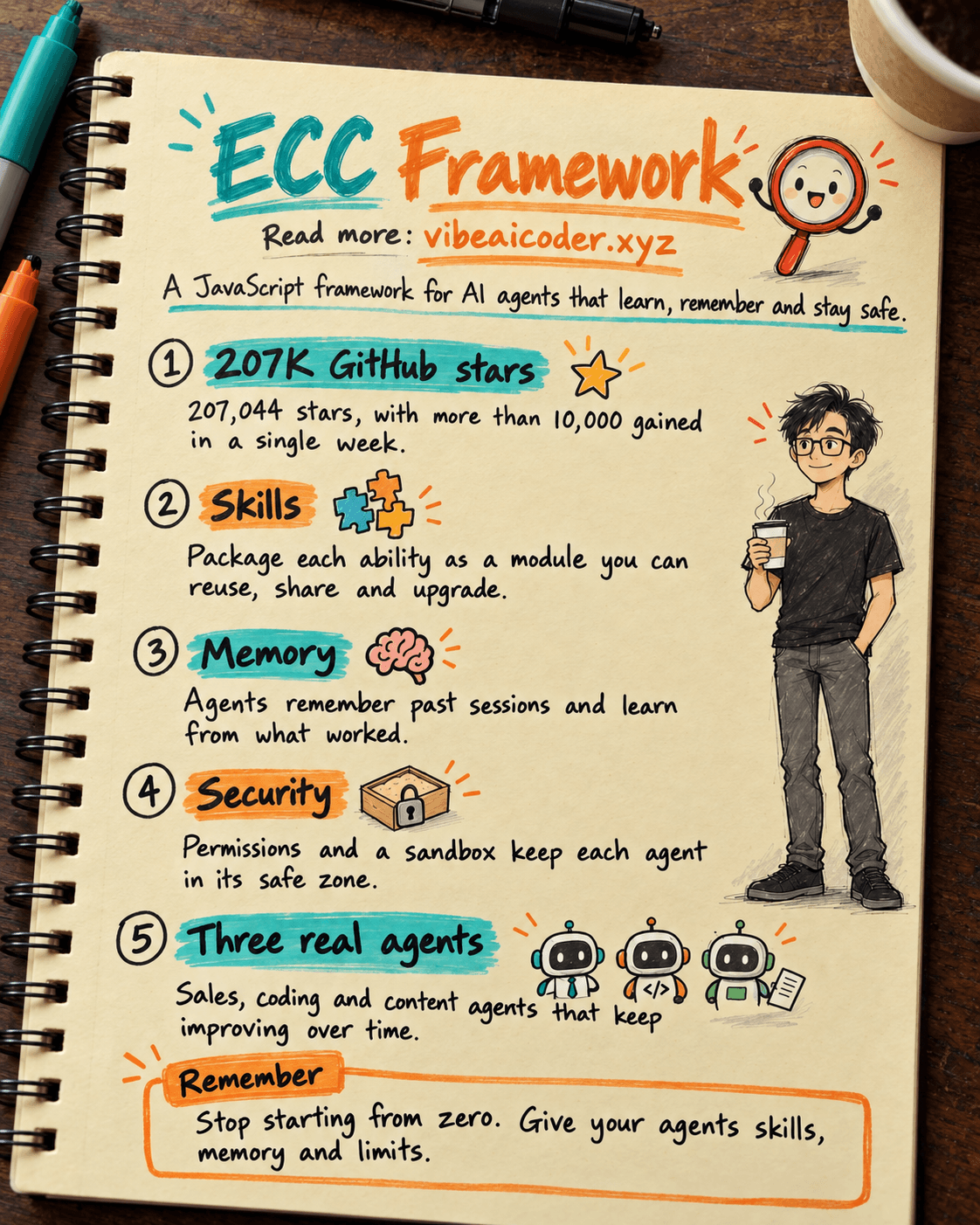
ECC is a JavaScript framework built to optimize AI agent performance. This week it sits at the top of GitHub trending with 207,044 stars, having gained more than 10,000 stars in a single week. That's not a small number, and it says a lot about how much interest developers worldwide have in this approach.
Instead of restarting from zero every time you chat with an AI, ECC lets you build agents that are genuinely smart: they have memory, they have skills, and they know how to protect the system on their own.
Skills: Modular Abilities You Can Reuse
The first piece of ECC is Skills, a modular skill system. Think of it this way: you have a sales agent, and you want it to know how to analyze orders, write follow up emails, and calculate discount pricing. Instead of cramming everything into one giant prompt, ECC lets you package each capability into its own module.
That module can be reused across different agents, shared with your team, and, just as importantly, upgraded piece by piece without touching the rest of the system.
Memory: The Agent Remembers You Across Sessions
This is something most people are missing when they use AI in the usual way. Memory in ECC lets an agent store information from previous interactions and learn from that experience.
A real example: you have a content agent, and yesterday it posted something that got strong engagement. With Memory, the agent can recall what made that post work, what time it went up, and its format, then adjust future posts accordingly. Or your coding agent hits a bug it has already debugged successfully; the next time a similar bug shows up, it remembers the fix instead of figuring it out again from scratch.
Security: Permission Controls and Sandboxing for Agents
A powerful AI agent with no limits is a dangerous one. Security is ECC's third pillar, focused on permission control and sandboxing.
In plain terms, you define exactly what the agent can and cannot do. A sales agent might have permission to read the CRM and send emails, but no permission to delete data or touch the finance system. The sandbox keeps the agent operating inside its approved safe zone, preventing unintended actions that could harm your system or your data.
For Vibe Coders: Real Agents Across Three Industries
Because ECC is a JavaScript framework, it's very easy to drop into a web project you already have. Three real use cases worth trying right away:
A sales agent that learns from past successful orders to improve how it advises customers and closes deals. A coding agent that debugs its own errors, remembers patterns it has already seen, and keeps optimizing over time. A content agent that tracks engagement on every post, learns from real data, and keeps adjusting so its content performs better and better.
How are you using AI right now, calling the API by hand each time, or have you already tried building a self-learning agent?
More articles

AI Training vs Inference: What Is the Difference?

Gemini 4 Argon Reads a 500-Page Chemistry Patent in One Afternoon

Claude Opus 5.5 Codes a Real Money Trading Game in One Day

What Is a Token in AI? Why ChatGPT and Claude Charge by Tokens

What Is Chain of Thought? Why Asking AI to Think Step by Step Works Better

Claude Sonnet 5.5 vs GPT-6.1 Sol: Which AI Model Is Worth Using?