 OpenClaw: The Open-Source Local AI Assistant for Total Privacy
210,000 GitHub stars in 2026 is no small feat, and OpenClaw is proving that AI does not need the cloud to be powerful.
 What Is OpenClaw?
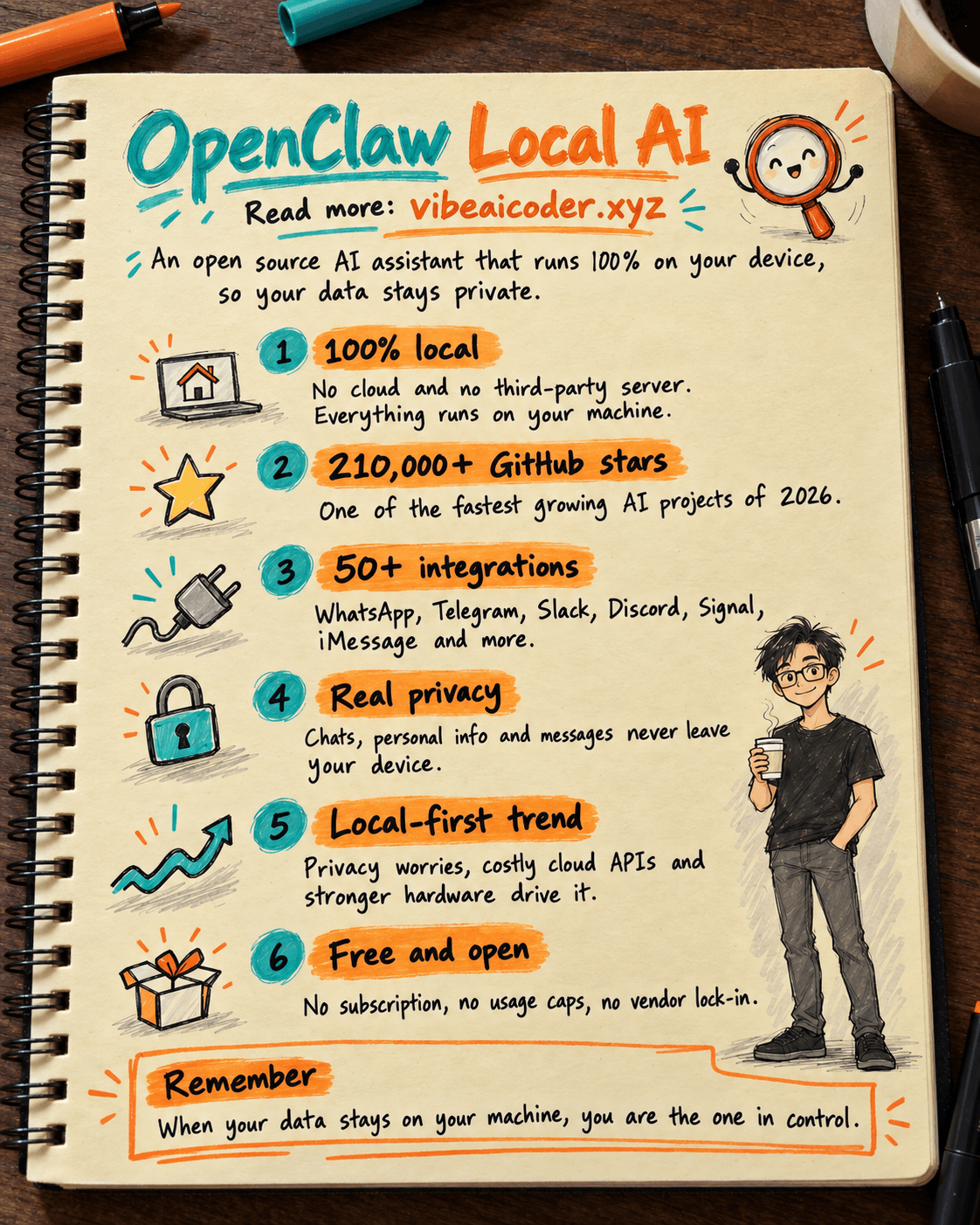
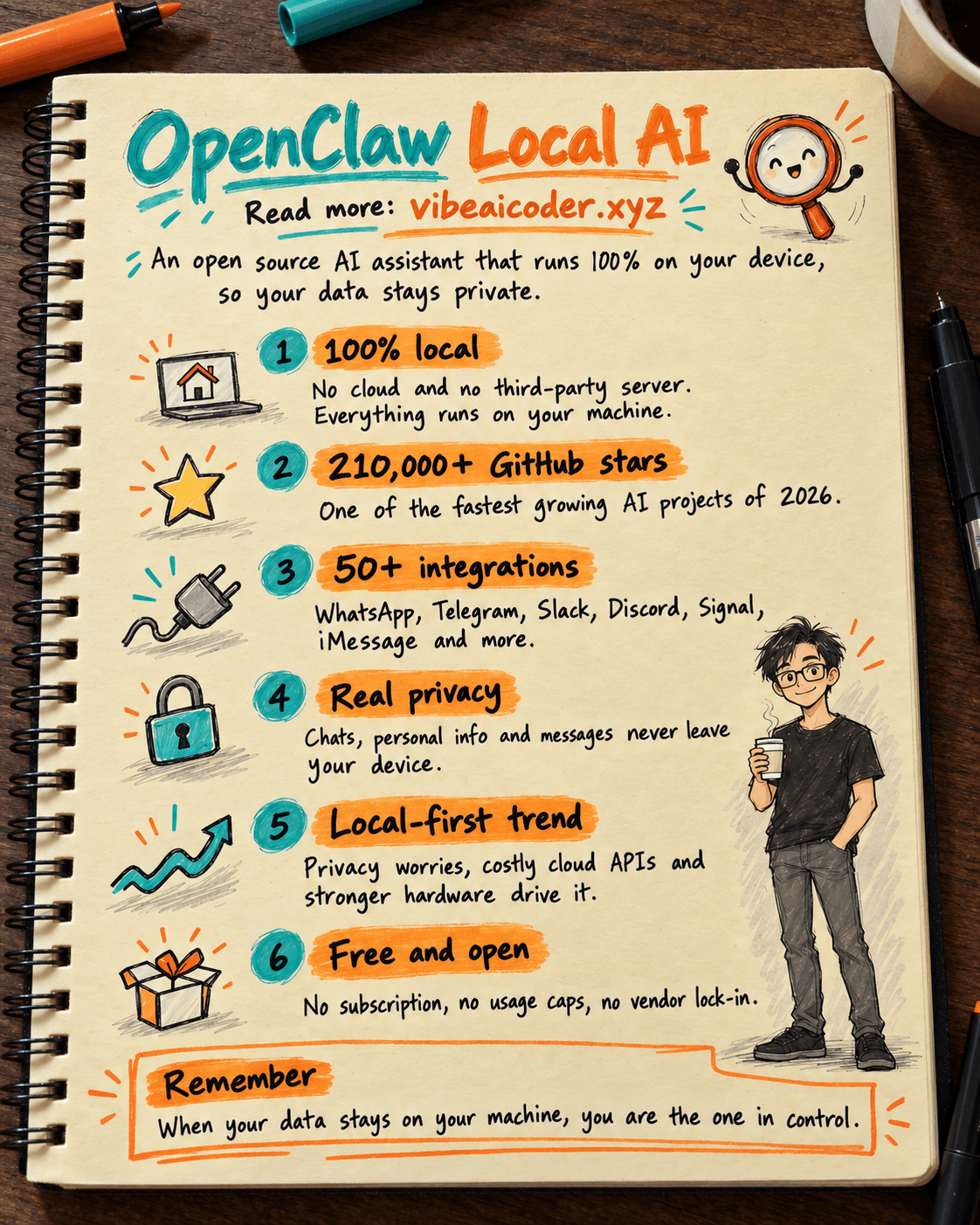
OpenClaw is an open-source personal AI assistant built to run 100% locally on your own device. No cloud connection required, no data sent to a third-party server. Everything happens right on your machine, from natural language processing to connecting with other apps.
With more than 210,000 GitHub stars, it is one of the fastest-growing AI projects the community has embraced this year, and the reason is clear.
 50+ Integrations in One Place
OpenClaw's biggest strength is acting as a local gateway, a middle layer between AI models and your app ecosystem.
You can connect OpenClaw to more than 50 integrations, including familiar names like WhatsApp, Telegram, Slack, Discord, Signal, and iMessage. That means you can use AI to handle messages, automate replies, or pull together information from multiple platforms, all without ever leaving your local environment.
 Privacy Is No Longer a Trade-off
When you use most popular AI assistants, you have to accept one thing: your data passes through their servers. With OpenClaw, that never happens.
All your data, conversation history, personal information, and message content never leaves your device. That is a level of privacy most commercial AI tools simply cannot offer. When your data stays on your own machine, you are the one actually in control of it.
 Local-First AI: The Trend Dominating GitHub in 2026
OpenClaw is not the only project heading in this direction. 2026 is seeing a strong wave of local-first AI, tools built on the philosophy of running locally first instead of depending on the cloud.
Several things are driving this trend: growing privacy concerns, cloud API costs that are no longer cheap, and personal hardware that keeps getting more powerful.
 Getting Started With OpenClaw
Because it is open-source, you can install and customize OpenClaw however you like. No subscription fees, no usage caps tied to a paid plan, and no vendor lock-in.
Do you prioritize privacy or features when choosing an AI tool? Share your take in the comments.
More articles

Gemini 4 Argon Reads a 500-Page Chemistry Patent in One Afternoon

Claude Opus 5.5 Codes a Real Money Trading Game in One Day

What Is a Token in AI? Why ChatGPT and Claude Charge by Tokens

What Is Chain of Thought? Why Asking AI to Think Step by Step Works Better

Claude Sonnet 5.5 vs GPT-6.1 Sol: Which AI Model Is Worth Using?

 Claude Opus 5.5 Launches: 30% Faster, 40% Cheaper, Blocks AI Brain Copying