 Microsoft's Project Polaris to Replace GPT-4 in GitHub Copilot
Microsoft just announced something few developers saw coming: it is building its own coding AI to replace OpenAI's models inside its flagship developer product.
What Is Project Polaris?
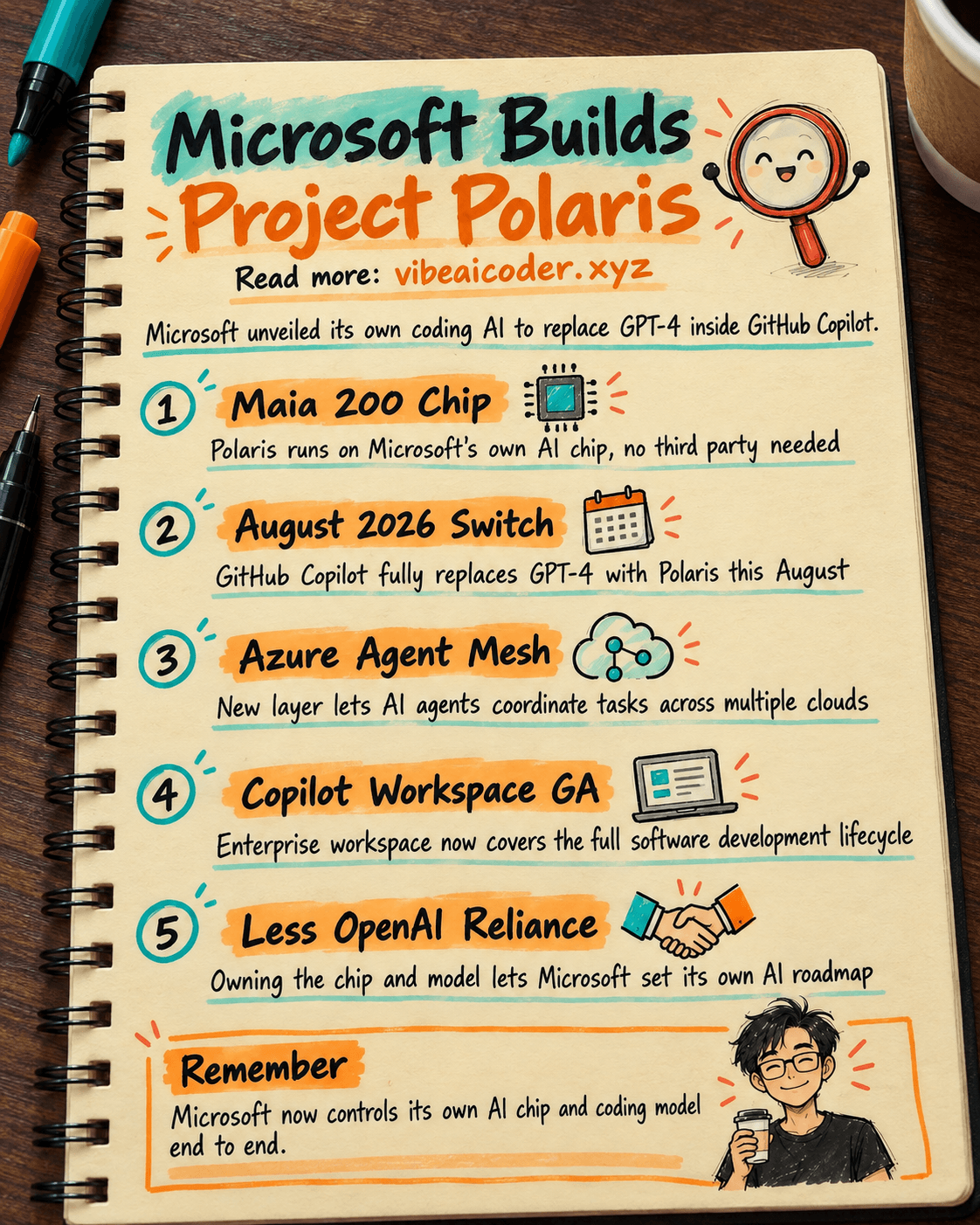
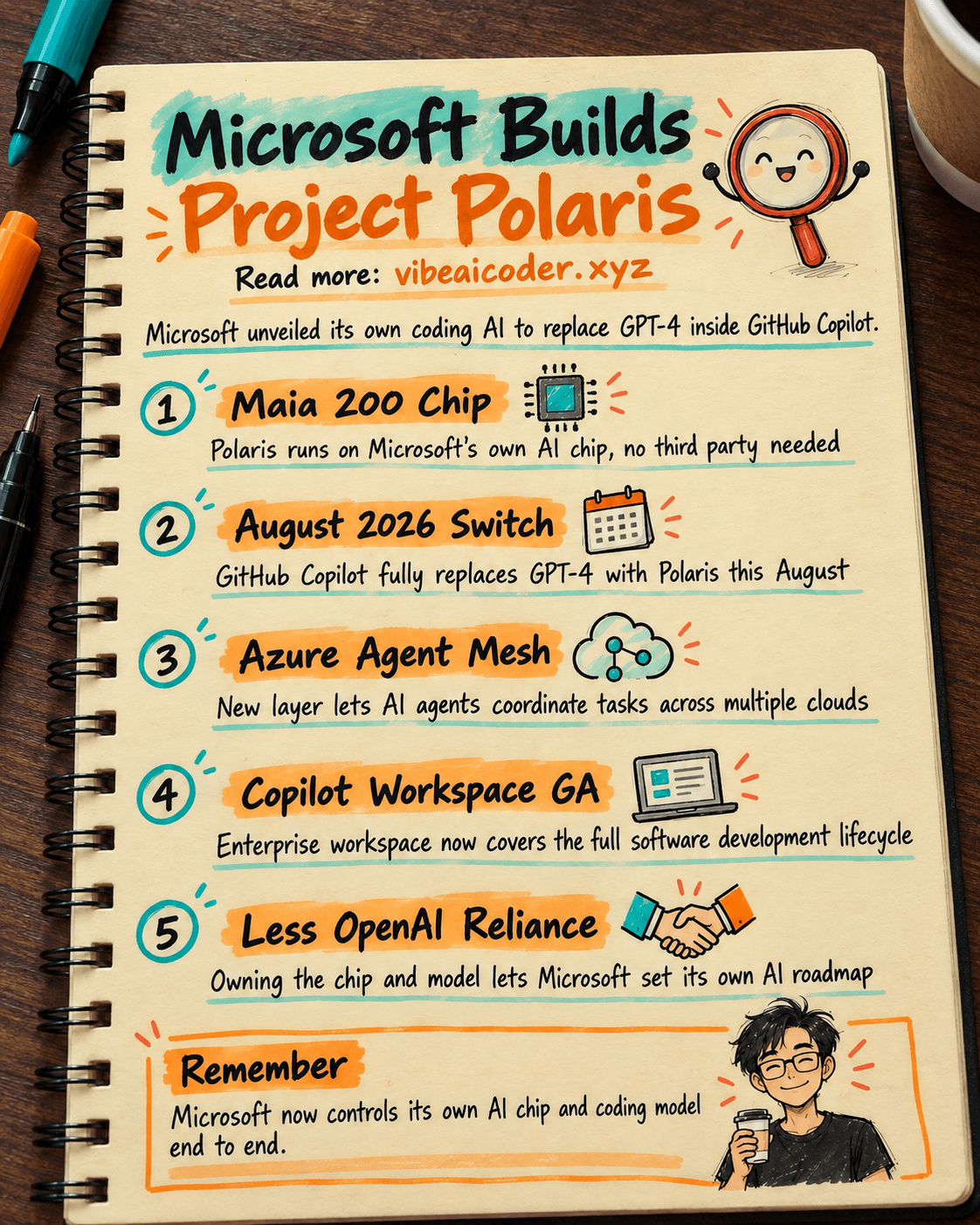
At Microsoft Build 2026, held on June 2, 2026, Microsoft officially introduced Project Polaris, an AI model built from scratch purely to serve developers. Rather than a general-purpose model that tries to do everything, Polaris is fully optimized for specific coding tasks: refactoring code, writing tests automatically, and code review without a human in the loop.
The notable part is that Polaris runs directly on Maia 200, the AI chip Microsoft designed and manufactures itself. This marks the first time Microsoft controls the entire stack, from hardware to model, without depending on a third party for compute infrastructure.
The Timeline For Replacing GPT-4 In Copilot
Microsoft confirmed that GitHub Copilot will switch to Polaris in August 2026, fully replacing the GPT-4 model it currently runs on. With millions of developers using Copilot every day, this is one of the largest AI model migrations the software industry has ever seen.
Microsoft did not detail how Polaris compares to GPT-4 on general benchmarks, but it says Polaris outperforms on specialized coding tasks because it was trained and tuned for that purpose from day one.
Azure Agent Mesh And Copilot Workspace Go GA
Alongside Polaris, Microsoft launched Azure Agent Mesh, an orchestration layer built specifically for AI agents running across multiple clouds. Instead of each agent operating in isolation, Azure Agent Mesh lets them coordinate, share context, and carry out complex, multi-step tasks without manual intervention.
Copilot Workspace also reached general availability for Enterprise customers at the event. It is a workspace that integrates Copilot deeply into the entire software development lifecycle, from planning and writing code to running tests, reviewing, and merging.
In addition, Windows Agent Framework 1.0 was open sourced, opening the door for the community to build its own agents that run directly on Windows without paid APIs.
Signs Microsoft Wants To Move Away From OpenAI
This is not the first time Microsoft has signaled it wants to reduce its dependence on OpenAI. After years of partnership and tens of billions of dollars invested, building Polaris in house suggests Microsoft is preparing for a more independent path, at least for its most important developer-facing products.
Controlling both the Maia 200 chip and the Polaris model means Microsoft can set its own costs, control the pace of improvements, and ship distinctive features without waiting on, or negotiating with, a partner. It is a clear strategic move.
What Did Satya Nadella Say?
CEO Satya Nadella summed up Microsoft's vision at the event with a notable line: AI has shifted from being a "synchronous assistant" to an "asynchronous colleague" capable of carrying out long-running tasks without a person waiting at every step.
That reflects a broader industry shift. AI is no longer just suggesting code or completing a line, it is increasingly taking on work that spans hours or days, handing back results once the job is done.
Given what Microsoft just announced, do you think GitHub Copilot will feel genuinely different once it runs on Polaris, or is this more of a commercial move than a technical one?
More articles

Gemini 4 Argon Reads a 500-Page Chemistry Patent in One Afternoon

Claude Opus 5.5 Codes a Real Money Trading Game in One Day

What Is a Token in AI? Why ChatGPT and Claude Charge by Tokens

What Is Chain of Thought? Why Asking AI to Think Step by Step Works Better

Claude Sonnet 5.5 vs GPT-6.1 Sol: Which AI Model Is Worth Using?

 Claude Opus 5.5 Launches: 30% Faster, 40% Cheaper, Blocks AI Brain Copying