 Herdr: Run Claude Code, Cursor, and Gemini CLI Together in One Terminal
Are you running one AI agent at a time, waiting for it to finish before starting the next? There is a much faster way to work.
The Problem With Running Agents One By One
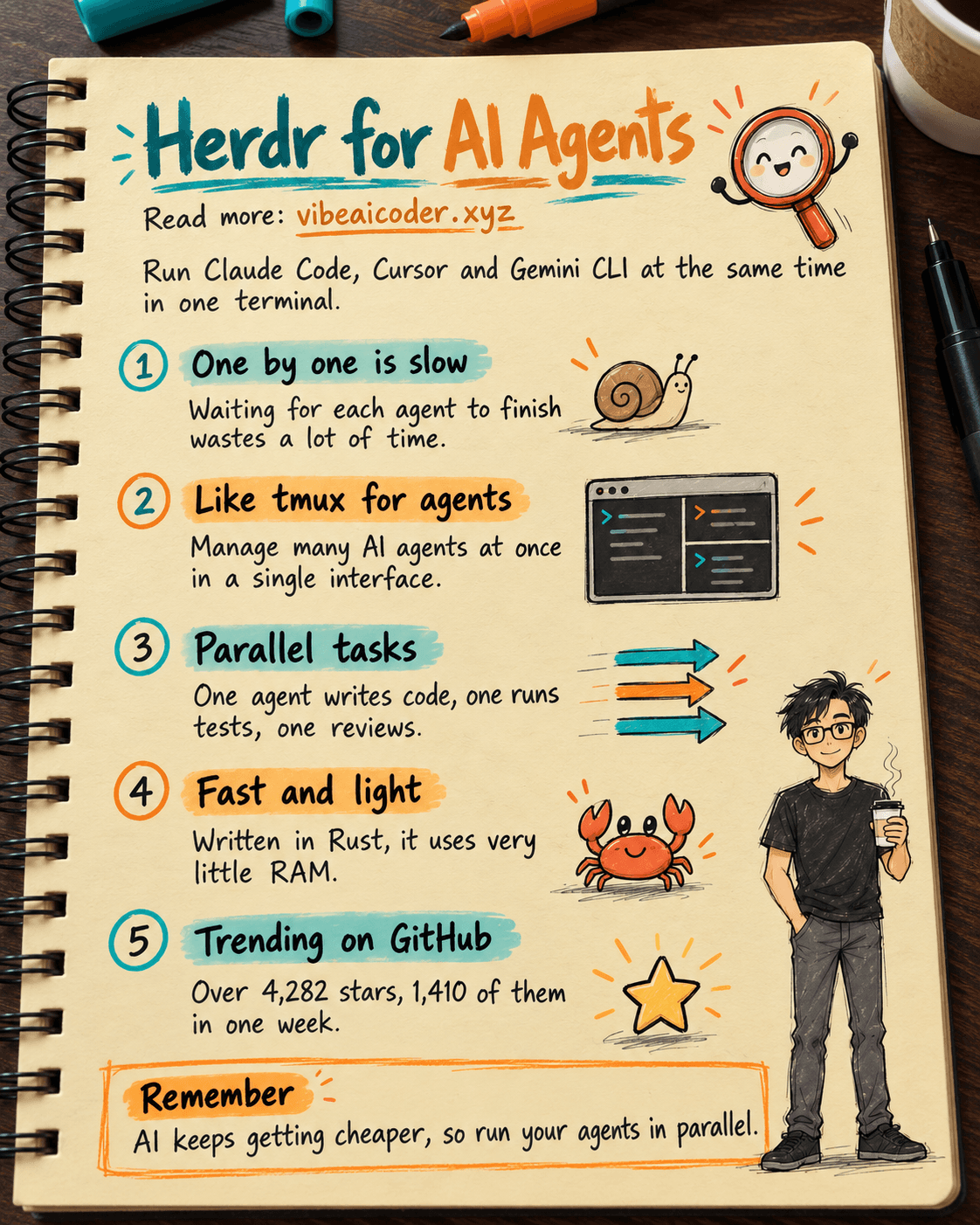
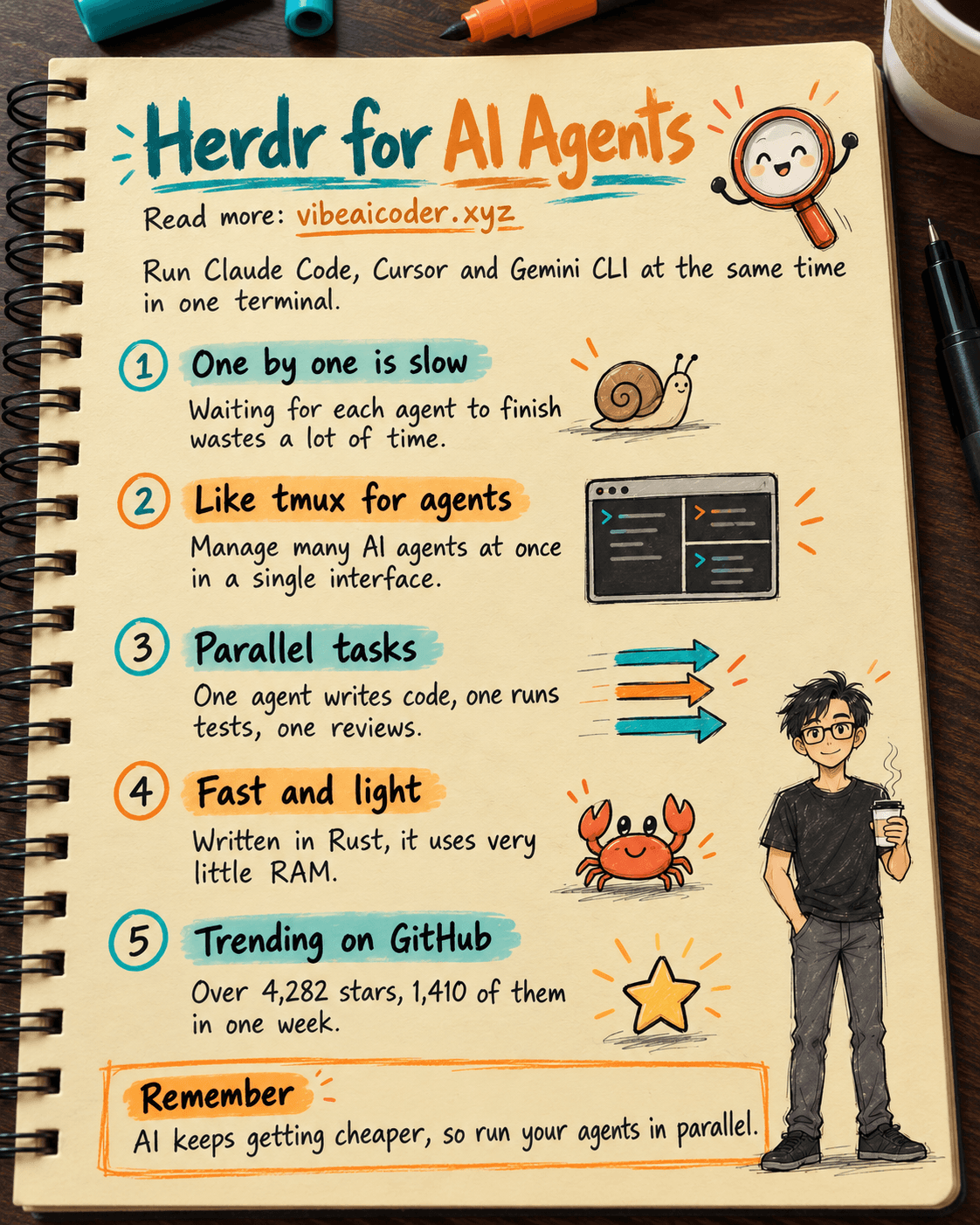
Most people use AI agents sequentially: run Claude Code to write something, wait for it to finish, then run another agent to test it, then wait again to review the result. That approach is safe, but it is slow and wastes a lot of time.
As AI gets cheaper, the best strategy is not to use less of it, it is to run several agents at the same time. That is exactly what a new tool called herdr was built to do.
What Is Herdr?
herdr is an agent multiplexer written in Rust. It has been trending on GitHub with more than 4,282 stars, and it gained 1,410 of those stars in a single week, a clear sign of how much interest developers have in it.
Think of it this way: herdr is like tmux, but built specifically for AI agents. Instead of managing several terminal sessions by hand, you manage several AI agents running at once inside a single interface.
What Can You Actually Do With Herdr?
Instead of waiting for one task to finish before starting the next, herdr lets you:
Run Claude Code, Cursor, and Gemini CLI at the same time in a single terminal. Each agent works on its own task without stepping on the others.
Split work into parallel tasks: one agent writes code, another runs tests, another reviews the logic, all at the same time. Once all three finish, you pull the results together and make the final call.
Move fast without slowing your machine down. Because herdr is written in Rust, it is very fast and uses very little RAM compared to similar tools built with Node or Python, so you can run multiple agents without bogging down your computer.
Herdr Acts Like a Conductor for Your AI Agents
The easiest way to picture herdr is as a conductor leading an orchestra. You do not have to tell each instrument exactly when to play, the conductor handles that. herdr sits in the middle, coordinating your AI agents, collecting their output, and helping you bring the results together.
For non technical vibe coders, the use case is simple: say you need to build a feature. Instead of doing everything step by step, you spin up three agents, one to write the code, one to generate test cases, and one to check for security issues. All three run in parallel, and you save most of the time you would otherwise spend waiting.
Installing Herdr Is Simple
Setting up herdr is not complicated. Since it is written in Rust, all you need is the Rust toolchain and you can install it with cargo. The GitHub repo includes full setup instructions and is being updated constantly by a fast growing community.
The timing is interesting too. As AI models like Claude, Gemini, and GPT keep getting cheaper, the cost of running several agents in parallel is no longer a real barrier. herdr showed up right when the community needed a way to take advantage of that.
How many AI agents are you running in parallel in your workflow today? Or are you still running them one at a time?
More articles

Gemini 4 Argon Reads a 500-Page Chemistry Patent in One Afternoon

Claude Opus 5.5 Codes a Real Money Trading Game in One Day

What Is a Token in AI? Why ChatGPT and Claude Charge by Tokens

What Is Chain of Thought? Why Asking AI to Think Step by Step Works Better

Claude Sonnet 5.5 vs GPT-6.1 Sol: Which AI Model Is Worth Using?

 Claude Opus 5.5 Launches: 30% Faster, 40% Cheaper, Blocks AI Brain Copying